
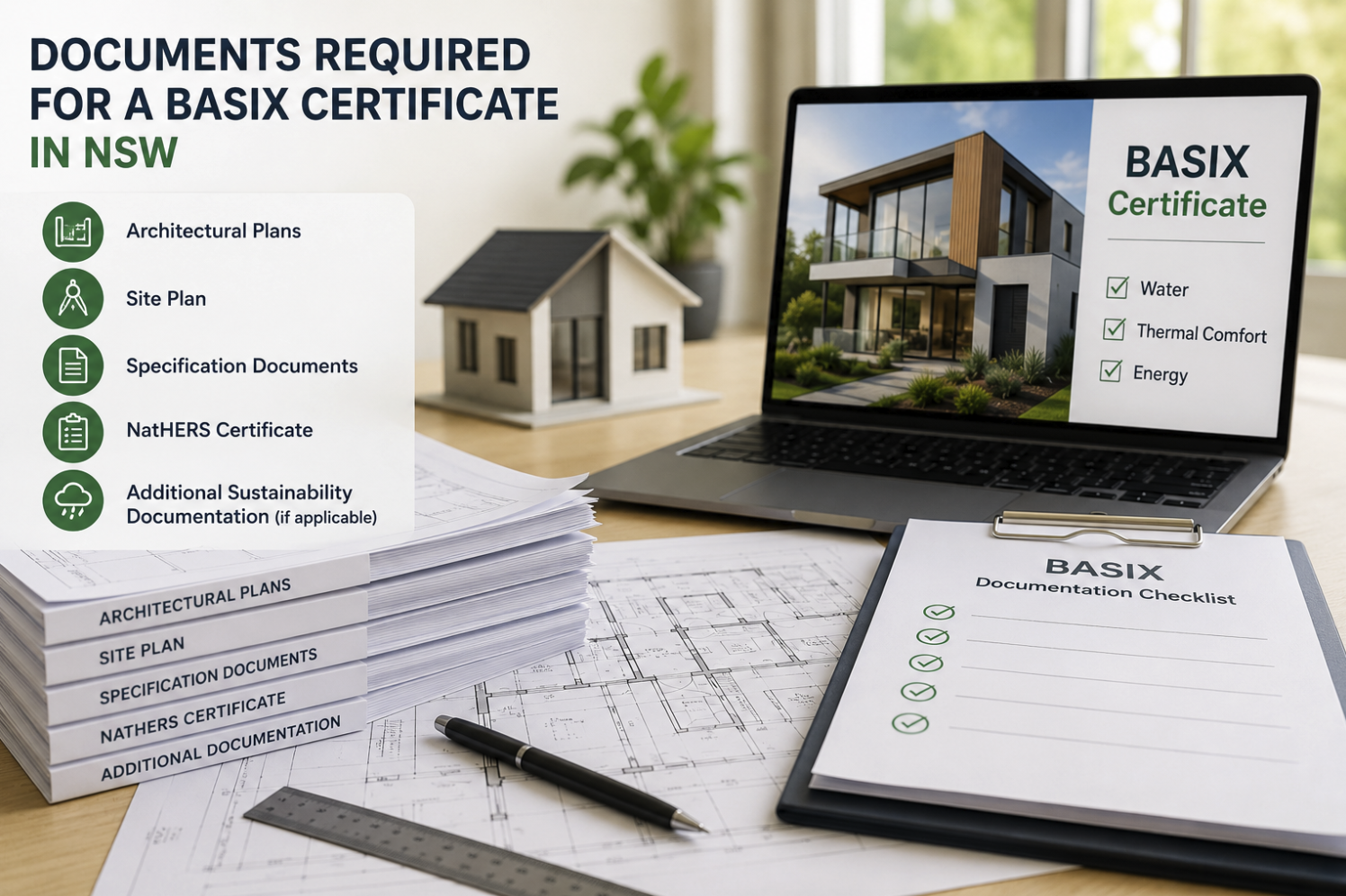
If you are preparing for a BASIX Certificate in NSW, one of the most useful things you can do early is make sure the right documents and project information are ready before the assessment starts. BASIX is not something that works well from guesswork or rough ideas alone. The quality of the certificate depends heavily on the quality of the plans, specifications, and design details that go into it. For homeowners, builders, and architects, that means preparation is one of the biggest factors in getting through the BASIX process smoothly.
NSW Planning specifically advises applicants to download and review the Data Input Checklist before starting the BASIX assessment. That checklist is there for a reason. It helps identify the information needed to complete the assessment accurately and reduce the chance of delays or revisions later. In practice, BASIX works best when the plans are already developed enough to reflect the actual project rather than an early concept that is still changing.
For anyone approaching approval, the practical question is not just what the BASIX tool asks for, but what documents should be organised first. The more complete the project information is, the easier it is to prepare a BASIX Certificate that aligns with the plans and supports the approval pathway.
Key Takeaways
- NSW Planning advises applicants to review the BASIX Data Input Checklist before starting the assessment.
- The most important BASIX documents are complete design plans and supporting project specifications.
- BASIX works best when the project type, layout, orientation, glazing, and building elements are already clear.
- Missing or inconsistent information can delay BASIX preparation or lead to certificate revisions later.
- The BASIX certificate is lodged with the DA or CDC application and must match the project being submitted.
- Good preparation early can help homeowners, builders, and architects avoid approval delays and unnecessary rework.
Summary Table
| Document or Information | Why It Matters |
|---|---|
| Design plans | BASIX needs the actual proposed design, not a rough idea of the project |
| Site and project details | Correct address, project type, and pathway selection affect how the BASIX assessment is set up |
| Window and glazing details | Glazing has a major effect on thermal performance and BASIX outcomes |
| Construction specifications | Wall, roof, floor, insulation, and shading details influence assessment results |
| BASIX Data Input Checklist | NSW Planning recommends reviewing this before starting the assessment |
| Final BASIX certificate | This is lodged with the DA or CDC and must match the submitted design |
Why BASIX Depends on Complete Project Documentation
A BASIX Certificate is only as accurate as the information used to prepare it. NSW Planning explains that the BASIX assessment should be completed once the design plans are complete, which highlights an important point for anyone involved in residential projects. BASIX is not designed to be built around rough assumptions. It relies on real project information that reflects the design being taken forward for approval.
This matters because the BASIX certificate is not just an internal calculation. It becomes part of the approval documents submitted with a DA or CDC application. If the design information is incomplete or inconsistent, the certificate may not properly match the project. That can cause delays, create extra work, or lead to revisions later if the documents do not line up.
For homeowners, builders, and architects, the practical lesson is simple. BASIX should be prepared from proper documents, not from early-stage guesses. The more complete the project information is at the start, the easier it is to produce a certificate that supports the approval process rather than slowing it down.
The Core Documents Usually Needed Before Starting BASIX
The most important starting point for BASIX is a set of reasonably complete design plans. These should show the project layout clearly enough for the BASIX assessment to reflect the actual proposal. NSW Planning also says applicants should review the Data Input Checklist before starting, which reinforces that BASIX depends on having the relevant information ready rather than collecting it halfway through the process.
In practice, the core documents usually include floor plans, site information, elevations or other design drawings that show the building form, and key specifications that explain how the home is proposed to be built. This often includes details about windows, glazing, insulation, construction type, and shading elements. The exact level of documentation can vary depending on the project type, but the BASIX assessment needs enough information to assess the proposal properly.
For architects and builders, this means design coordination matters early. For homeowners, it means the BASIX step is much easier when proper plans and specifications are already available. The clearer the documents are before the assessment begins, the smoother the BASIX process is likely to be.
What Plans and Drawings Matter Most for BASIX
Not every drawing carries the same weight in a BASIX assessment. The plans that matter most are the ones that define how the dwelling will actually perform. Floor plans are important because they show the building layout, room uses, and the overall shape of the dwelling. Site details are important because the project address and location affect how the BASIX pathway is set up, including postcode-related climate considerations. NSW Planning’s project details guidance also emphasises accurate entry of the project address and proposal type when starting the BASIX application. (planningportal.nsw.gov.au)
Elevations, sections, and other design drawings can also matter where they help clarify glazing, roof form, shading, and the relationship of the building to the site. BASIX relies on design information that can support decisions around thermal performance, which means window positions, building form, and orientation all become relevant.
For builders and architects, the practical takeaway is that BASIX should be prepared from drawings that are developed enough to support accurate assessment. If the design is still moving significantly, the BASIX certificate may need to move with it, which can slow the approval process and create more work.
Why Window, Insulation, and Specification Details Matter
Some of the most important BASIX inputs come from the specification side rather than the general plans alone. Window and glazing information is a major example. The size, placement, and likely performance of glazing can strongly affect the thermal side of BASIX. Insulation details are also important because they influence how the dwelling is assessed for comfort and efficiency outcomes.
This is one reason BASIX often becomes difficult when documentation is too general. A plan may show where a room sits within the house, but without enough information about windows, roof construction, wall systems, insulation, and shading, the BASIX result may not properly reflect how the home is intended to perform. NSW’s BASIX framework is built around sustainability commitments, so the certificate must connect with the actual design decisions being proposed.
For homeowners, this means product and material choices can matter earlier than expected. For builders and architects, it means BASIX is strongest when key specifications are already aligned with the design before the assessment is finalised.
What Happens If Your Documents Are Incomplete or Change Later
If your documents are incomplete when BASIX is prepared, the process can become slower and less reliable. Missing information may mean the assessment cannot be completed accurately the first time, or that it has to be based on assumptions that later need to be revised. NSW Planning also makes it clear that if changes are made to the project after the BASIX certificate is generated, the BASIX assessment must be revised and another certificate printed for re-lodgement if required.
This is especially relevant for projects where the design is still developing. If windows change, insulation changes, layout changes, or the project pathway changes, the BASIX certificate may no longer match the project being lodged. That can lead to approval delays and extra coordination between the owner, designer, builder, and BASIX consultant.
The practical takeaway is not that everything must be perfect before BASIX begins, but that the closer the documents are to the final design, the smoother the process tends to be. Good documentation early usually means fewer problems later.
How to Prepare Your BASIX Documents Before Lodgement
The simplest way to prepare for BASIX is to treat document collection as part of the early approval process rather than something left until the last minute. NSW Planning already provides the clearest starting point by recommending the Data Input Checklist before the BASIX assessment begins. That is the best foundation for understanding what information should be assembled first.
For homeowners, this means working from proper plans rather than early concepts. For architects, it means ensuring the drawings communicate the design clearly enough for BASIX to reflect it accurately. For builders, it means checking that the proposed build intent and specifications match the documentation being used for the certificate.
When the documents are prepared early and checked properly, BASIX becomes much easier to manage. The certificate can then support the DA or CDC submission as intended, rather than becoming a source of delay or rework.
Final Thoughts
The documents required for a BASIX Certificate in NSW are really the documents that explain the project clearly enough for the BASIX assessment to reflect the actual design. NSW Planning points applicants toward the Data Input Checklist for a reason. BASIX works best when the relevant plans, site details, and key specifications are already organised before the assessment starts.
For homeowners, builders, and architects, good preparation is one of the easiest ways to make the BASIX process smoother. When the documents are clear, complete, and consistent, the certificate is much easier to prepare and much more likely to align with the approval pathway from the start.
FAQs
1. What documents do I need for a BASIX Certificate in NSW?
You generally need complete design plans, project details, and supporting specifications before a BASIX Certificate can be prepared properly. NSW Planning recommends reviewing the Data Input Checklist first so you can gather the relevant information before starting the assessment.
2. Do I need full house plans before getting a BASIX Certificate?
You need plans that are developed enough to reflect the actual project. BASIX works best once the design plans are complete, because the certificate needs to match the proposal being lodged for approval.
3. Are window and glazing details required for BASIX?
Yes. Window and glazing details are important because they affect thermal performance, which is a key part of BASIX. Missing glazing information can make the assessment less accurate or delay preparation.
4. Do I need specifications as well as drawings?
Usually, yes. Drawings show the layout and form of the project, while specifications help clarify how the building will perform, including items such as insulation, construction type, and shading.
5. What happens if my BASIX documents change later?
If the project changes after the BASIX certificate is generated, the BASIX assessment may need to be revised so the certificate still matches the design being submitted.
6. When should I organise BASIX documents?
It is best to organise BASIX documents before the DA or CDC is lodged, while the design is being finalised. Good preparation early usually helps avoid delays and rework later.
Slug
what-documents-are-required-for-a-basix-certificate-in-nsw
Meta Description
Learn what documents are required for a BASIX Certificate in NSW, including plans, specifications, glazing details, and project information.
Focus Keyphrases
documents for BASIX certificate, BASIX document checklist NSW, BASIX Certificate requirements, BASIX plans and specifications, BASIX paperwork NSW
Tags
documents for BASIX certificate, BASIX Certificates, BASIX document checklist, BASIX Certificate requirements, homeowners NSW, builders NSW, architects NSW, NSW planning approval
Excerpt
Need to know what documents are required for a BASIX Certificate in NSW? This guide explains the plans, specifications, and project information you should prepare before lodgement.
Feature Image Suggestion
BASIX certificate documents house plans NSW