
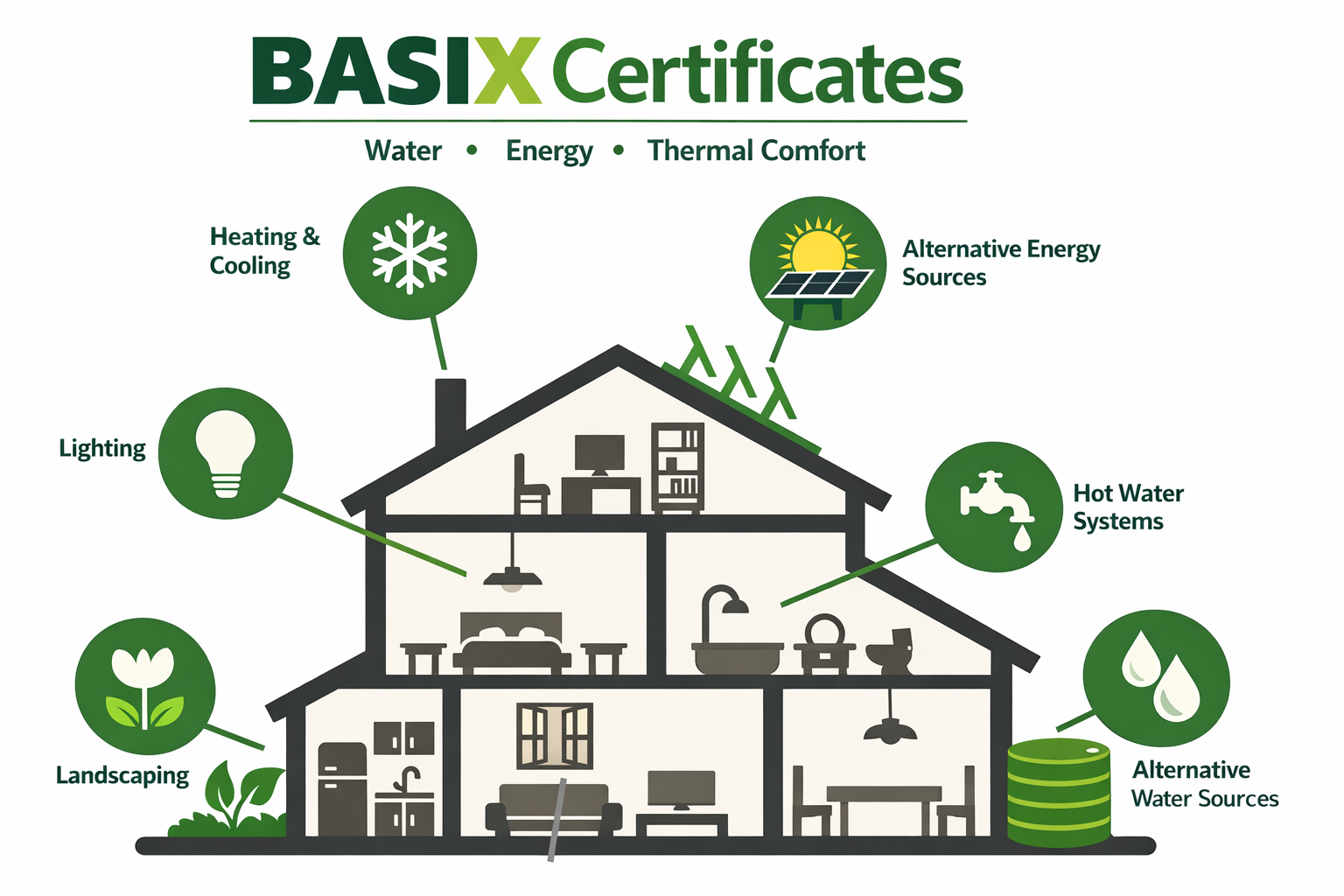
BASIX thermal comfort targets are often the most challenging part of compliance, particularly when they’re addressed too late in the design process. Once layouts are locked in and glazing ratios are set, meeting thermal targets can quickly turn into a cycle of modelling tweaks, reissues, and expensive mechanical solutions.
Passive design offers a far more reliable path to BASIX thermal compliance. By prioritising orientation, layout, building fabric, and shading early, architects and builders can significantly improve thermal performance without over-relying on heating and cooling systems. These strategies not only help projects pass BASIX more comfortably, but they also support better long-term comfort and energy efficiency for occupants.
In NSW, where climate zones vary widely, passive design decisions made at concept and design development stages have the greatest influence on BASIX outcomes. This article breaks down practical passive design strategies that consistently improve thermal modelling results and help projects meet BASIX thermal targets with fewer compromises later on.
Key Takeaways
- BASIX thermal comfort targets are highly sensitive to early design decisions.
- Passive design reduces reliance on mechanical heating and cooling systems.
- Orientation and layout have a greater impact than late-stage upgrades.
- Glazing ratios and shading significantly affect thermal performance.
- Insulation and building fabric choices stabilise internal temperatures.
- Poor passive design often leads to BASIX reissues and delays.
- Early alignment between design and BASIX modelling improves outcomes.
Summary Table
| Passive Strategy | Impact on BASIX Thermal Targets | Best Stage to Apply |
| Orientation | Major performance improvement | Concept design |
| Layout | Supports passive heat gain | Concept design |
| Glazing | Controls heat gain and loss | Design development |
| Shading | Reduces summer overheating | Design development |
| Insulation | Stabilises internal comfort | Design and construction |
Why BASIX Thermal Targets Are Often the Hardest to Meet
Thermal comfort targets are often the most difficult BASIX benchmarks to satisfy because they are heavily influenced by design decisions made early in a project. Unlike energy or water targets, thermal performance cannot always be corrected with upgraded systems or fixtures later in the process. Once orientation, layout, and glazing are locked in, modelling flexibility is significantly reduced.
BASIX thermal modelling is particularly sensitive to window placement, glazing ratios, and building fabric. Small changes to window size or orientation can have a disproportionate impact on heating and cooling loads, especially in NSW climate zones with high seasonal variation. When these factors are not considered early, projects often fail thermal targets and require re-modelling or design changes.
Late-stage attempts to resolve thermal non-compliance frequently rely on higher-performing mechanical systems or additional insulation, which can increase costs and complicate construction. This approach may achieve compliance on paper but does not always deliver optimal real-world performance.
Understanding why thermal targets fail highlights the importance of passive design. Addressing thermal performance at concept stage remains the most effective way to meet BASIX requirements without unnecessary compromise or rework.
Orientation and Layout as the Foundation of Passive Design
Orientation and internal layout are the most powerful passive design tools available for improving BASIX thermal performance. In NSW, prioritising north-facing living areas allows a building to capture winter solar gain while making it easier to control summer heat through shading. When this opportunity is missed, thermal performance often suffers and becomes difficult to recover later.
Layout plays a critical supporting role. Zoning living spaces, bedrooms, and service areas appropriately helps regulate internal temperatures throughout the day. Locating frequently used spaces where they can benefit from favourable solar exposure improves comfort and reduces reliance on mechanical heating and cooling. Less frequently occupied areas can act as buffers to external temperature extremes.
For architects and builders, these decisions need to be embedded at concept stage. Adjusting orientation or reworking layouts after documentation often results in compromised solutions that increase complexity without delivering meaningful thermal gains.
Projects that consider orientation and layout early tend to perform more consistently in BASIX thermal modelling. These designs not only achieve compliance more comfortably but also deliver buildings that feel better to occupy year-round, reinforcing the value of passive design from the outset.
Glazing, Shading, and Window Performance
Glazing selection and window design have a significant impact on BASIX thermal outcomes, often more than any other single building element. Window size, placement, orientation, and performance all influence how much heat enters or escapes a building across different seasons. Poorly considered glazing ratios can quickly push a project outside BASIX thermal limits, particularly in summer-dominated climate zones.
High-performance glazing can help manage heat gain and loss, but it is not a cure-all. Oversized windows or poorly oriented openings can still undermine thermal performance, even with upgraded glass. Shading, therefore, plays a critical role in controlling solar exposure. Fixed shading, eaves, awnings, and external screens allow buildings to benefit from winter sun while limiting overheating during warmer months.
From a BASIX perspective, the combination of glazing and shading is far more effective than relying on glass upgrades alone. Projects that integrate shading into the architectural design tend to perform more consistently in thermal modelling.
For architects and builders, treating glazing and shading as a coordinated system rather than separate decisions leads to stronger BASIX outcomes. It reduces the likelihood of late-stage design changes to achieve compliance.
Designing for Thermal Performance Without Over-Reliance on Systems
Mechanical heating and cooling systems can help support BASIX compliance, but they should not be the primary strategy for meeting thermal comfort targets. When passive design is overlooked early, projects often rely on higher-capacity systems to compensate for poor thermal performance. While this may achieve compliance on paper, it can increase costs and reduce long-term efficiency.
From a BASIX modelling perspective, passive design reduces heating and cooling loads before systems are even considered. Well-oriented layouts, controlled glazing, effective shading, and continuous insulation allow buildings to maintain more stable internal temperatures naturally. This makes it easier for mechanical systems to meet remaining demand without being oversized or over-specified.
Designing with passive performance in mind also provides greater flexibility during BASIX assessment. Projects with strong passive fundamentals typically require fewer last-minute adjustments and are less likely to trigger reissues when plans evolve.
For architects and builders, the goal is balance. Mechanical systems should support a well-performing building, not correct fundamental design limitations. Passive design-first projects consistently achieve smoother BASIX approvals and deliver better outcomes for both compliance and occupant comfort.
Final Thoughts
BASIX thermal targets are rarely missed because of minor specification choices. More often, they fall short due to early design decisions that limit thermal performance before modelling even begins. Passive design remains the most effective way to meet BASIX thermal comfort requirements without relying on oversized systems or late-stage fixes.
For architects and builders working in NSW, prioritising orientation, layout, glazing control, shading, and building fabric early delivers more predictable BASIX outcomes and smoother approvals. Projects designed with passive performance in mind typically require fewer revisions, experience fewer delays, and achieve better long-term comfort for occupants.
By embedding passive strategies at concept and design development stages, BASIX compliance becomes a natural outcome of good design rather than a problem to solve later in the process.
FAQs Answered:
What passive design strategies help meet BASIX thermal comfort targets?
Passive strategies such as correct orientation, controlled glazing ratios, effective shading, continuous insulation, and thoughtful layout zoning have the greatest impact on BASIX thermal performance. These elements reduce heating and cooling loads before mechanical systems are considered, making compliance easier and more reliable.
How early should BASIX thermal performance be considered in design?
Thermal performance should be considered at the concept stage. Decisions around orientation, layout, and window placement made early have the largest influence on BASIX outcomes. Leaving thermal considerations until later often results in limited modelling flexibility and increased reliance on system upgrades.
Does passive design reduce the need for mechanical heating and cooling systems?
Yes. Strong passive design reduces heating and cooling demand, which can allow for smaller, more efficient systems. While mechanical systems are still required, they should support a well-performing building rather than compensate for poor thermal design.
Can poor orientation cause BASIX thermal compliance issues?
Absolutely. Poor orientation can significantly increase heating and cooling loads, particularly in NSW climate zones with strong seasonal variation. Once orientation is locked in, correcting thermal performance becomes far more difficult and often requires costly design adjustments.
Who should be involved in BASIX thermal planning?
Architects, designers, builders, and BASIX consultants should all be involved early. Collaboration ensures design intent aligns with BASIX modelling assumptions, reducing the risk of reissues and approval delays.