
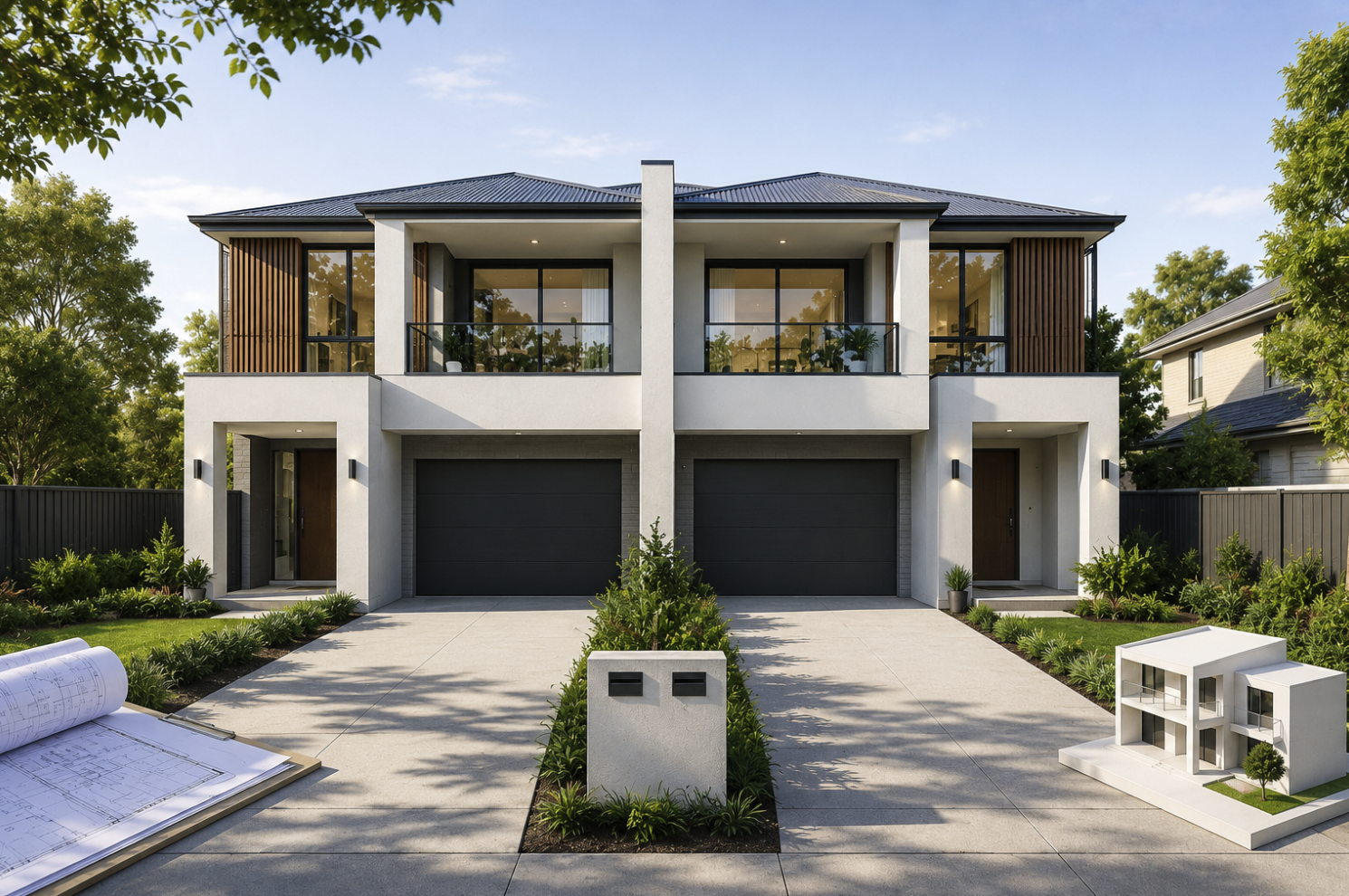
If you are planning a duplex in NSW, BASIX is something that needs to be considered early. A duplex is not treated the same way as a standard single dwelling, and that difference matters when you are setting up the BASIX assessment and preparing for approval. For homeowners and developers, understanding the BASIX position early can help avoid confusion, reduce rework, and make the planning process much smoother.
In practical terms, duplex projects usually sit within the multi-dwelling BASIX framework. That means the project is generally assessed differently from a single new home or a simple renovation. BASIX still looks at the same core areas of water, energy, and thermal comfort, but the assessment pathway and project setup are specific to the type of residential development being proposed.
This matters because duplex projects often involve two dwellings on the same site, shared site considerations, and more coordination between design, documentation, and compliance. When the BASIX pathway is set up correctly from the start, the project is much easier to manage. When it is not, approval delays and unnecessary revisions can follow.
Key Takeaways
- Duplex projects in NSW usually fall within the BASIX multi-dwelling pathway.
- BASIX applies to duplexes because they are residential developments involving more than one dwelling on a site.
- The project type must be set up correctly at the start of the BASIX application.
- Attached and detached dual occupancy projects can both be relevant in BASIX.
- Shared facilities, common areas, and dwelling details may need to be entered depending on the project setup.
- Early BASIX advice can help homeowners and developers avoid pathway errors and approval delays.
Summary Table
| Duplex Scenario | BASIX Position |
|---|---|
| Attached duplex on one site | BASIX usually required |
| Detached dual occupancy on one site | BASIX usually required |
| New duplex development | Usually assessed under the multi-dwelling BASIX pathway |
| Incorrect project pathway selection | Can create delays and rework |
| Shared systems or common areas | May need to be included in the BASIX assessment |
| DA or CDC submission | BASIX should be prepared before lodgement |
What Counts as a Duplex or Dual Occupancy in BASIX
In NSW, duplex-style projects are generally treated as dual occupancy developments when they involve two dwellings on the same site. These may be attached or detached, but the important point for BASIX is that the project involves more than one dwelling as part of the same development. That is why duplexes are not usually handled the same way as a standard single-house project.
For BASIX purposes, project classification matters because it determines which assessment pathway is used. If the project is entered incorrectly at the beginning, the BASIX tool may apply the wrong requirements or fail to reflect the development properly. This is one of the reasons duplex projects deserve early attention rather than being treated as a simple extension of a single dwelling approval.
For homeowners, the terminology can sometimes be confusing because “duplex” is commonly used in everyday language, while BASIX often uses “dual occupancy” or “multi-dwelling” language in the technical setup. The key point is that a two-dwelling project on one site is usually a BASIX project that needs the correct multi-dwelling style treatment from the start.
Why Duplex Projects Usually Fall Under the Multi-Dwelling Pathway
BASIX uses different pathways for single dwellings, multi-dwellings, and alterations and additions. Duplexes generally sit within the multi-dwelling pathway because the development includes more than one dwelling. NSW Planning guidance specifically includes dual occupancy within the broader multi-dwelling BASIX treatment, which is why duplex projects are normally set up differently from a standard house build.
This affects more than just the label in the system. The BASIX pathway influences what information must be entered, how the dwellings are treated in the assessment, and how the project details are documented. For larger or more detailed duplex projects, it can also affect how shared areas or systems are considered.
For developers, this means the project should be scoped properly from the beginning rather than trying to treat one side of the duplex as a standalone home. For homeowners, it means the BASIX process may feel a little more involved than a standard single dwelling, but that is because the sustainability assessment is being applied to a more complex project type.
Attached and Detached Duplexes Can Both Trigger BASIX
A duplex does not have to be attached to trigger BASIX. In NSW, both attached and detached dual occupancy developments can fall within the BASIX framework if they involve two dwellings on the same site. That means BASIX is relevant whether the project is a side-by-side duplex under one roofline or two separate dwellings that still form part of the same overall proposal.
This is important because some homeowners assume a detached arrangement might be treated more like two separate single houses. In BASIX, that is not usually how the project is approached if both dwellings are part of the same dual occupancy development. The planning and BASIX systems are looking at the total residential proposal on the lot, not just whether there is a physical wall between the dwellings.
For practical purposes, this means the project setup needs to reflect the true development type. If both dwellings form part of one duplex-style proposal, BASIX should generally be approached on that basis from the start.
What Information Needs to Be Entered for a Duplex BASIX Assessment
Because duplexes usually sit within the multi-dwelling BASIX pathway, the project details can be more involved than a simple single-dwelling application. BASIX may require information not only about the dwellings themselves, but also about how the overall development is configured. Depending on the project, this can include details about shared systems, common areas, building details, and the characteristics of each dwelling.
For owners and developers, this is where a duplex BASIX assessment can become more technical than expected. If the project includes common infrastructure or building elements that serve both dwellings, those features may need to be accounted for in the BASIX setup. The same applies where the project includes central systems or shared areas that affect water or energy use.
That does not mean the process is unmanageable. It simply means the BASIX assessment needs to be based on complete and accurate project information. The clearer the plans and project structure are before the BASIX work begins, the easier it is to prepare a certificate that supports the approval pathway properly.
Common BASIX Mistakes on Duplex Projects
One of the most common BASIX mistakes on duplex projects is selecting the wrong pathway at the start. If the project is set up as a single dwelling when it should be treated as a multi-dwelling or dual occupancy development, the BASIX assessment may not reflect the proposal correctly. That can lead to delays, corrections, and unnecessary rework later.
Another common issue is incomplete documentation. Duplex projects often require a more coordinated set of plans and specifications because there are two dwellings involved and, in some cases, shared project features. If the information is incomplete or inconsistent, the BASIX certificate may not align properly with the development application or complying development documentation.
For developers and homeowners alike, the lesson is straightforward. Duplexes are not necessarily difficult BASIX projects, but they do require the right setup and clear documentation. Small mistakes early in the process can become much more time-consuming once the project is moving toward lodgement.
Why Early BASIX Planning Matters for Duplex Developments
Early BASIX planning matters because duplex projects are usually more involved than standard single-dwelling builds. There are more moving parts, more project details to coordinate, and a greater chance that the wrong BASIX setup will create problems later if the pathway is not chosen carefully from the beginning.
For homeowners, early BASIX review helps answer a simple but important question: is the project being treated correctly as a duplex or dual occupancy development? For developers, it helps ensure the design, documentation, and approval strategy are all aligned before lodgement pressure builds.
The practical benefit is fewer surprises. When BASIX is addressed early, the assessment is more likely to reflect the real project, the documentation is more likely to stay consistent, and the path toward DA or CDC approval is generally smoother.
Final Thoughts
A duplex in NSW will usually require BASIX, and in most cases it should be assessed through the multi-dwelling pathway rather than as a standard single dwelling. That is because duplexes are generally treated as dual occupancy developments involving more than one dwelling on the same site. For both homeowners and developers, this makes the BASIX setup an important early step in the approval process.
The key is getting the pathway right from the start. When the project type is identified correctly and the design information is complete, BASIX becomes much easier to manage. That usually means fewer delays, fewer revisions, and a much smoother path through approval.
FAQs
1. Does a duplex need a BASIX Certificate in NSW?
Yes, a duplex in NSW will usually need a BASIX Certificate because it involves residential development with more than one dwelling on the site.
2. Is a duplex treated as a multi-dwelling project in BASIX?
Usually, yes. Duplexes are generally treated within the BASIX multi-dwelling framework because they involve dual occupancy or more than one dwelling in the development.
3. Do attached and detached duplexes both need BASIX?
Yes, both attached and detached dual occupancy style projects can require BASIX if they form part of the same residential development on one site.
4. Can I assess one half of the duplex as a single dwelling?
Usually, that is not the correct approach if both dwellings form part of one duplex project. The BASIX setup should reflect the overall development type.
5. What makes duplex BASIX assessments more complex?
Duplex assessments can involve more detail because there are two dwellings, and in some cases shared systems, common areas, or more involved project information to enter.
6. When should I organise BASIX for a duplex?
It is best to organise BASIX before lodging the DA or CDC, once the project type and design details are clear. Early setup usually helps avoid delays later.