
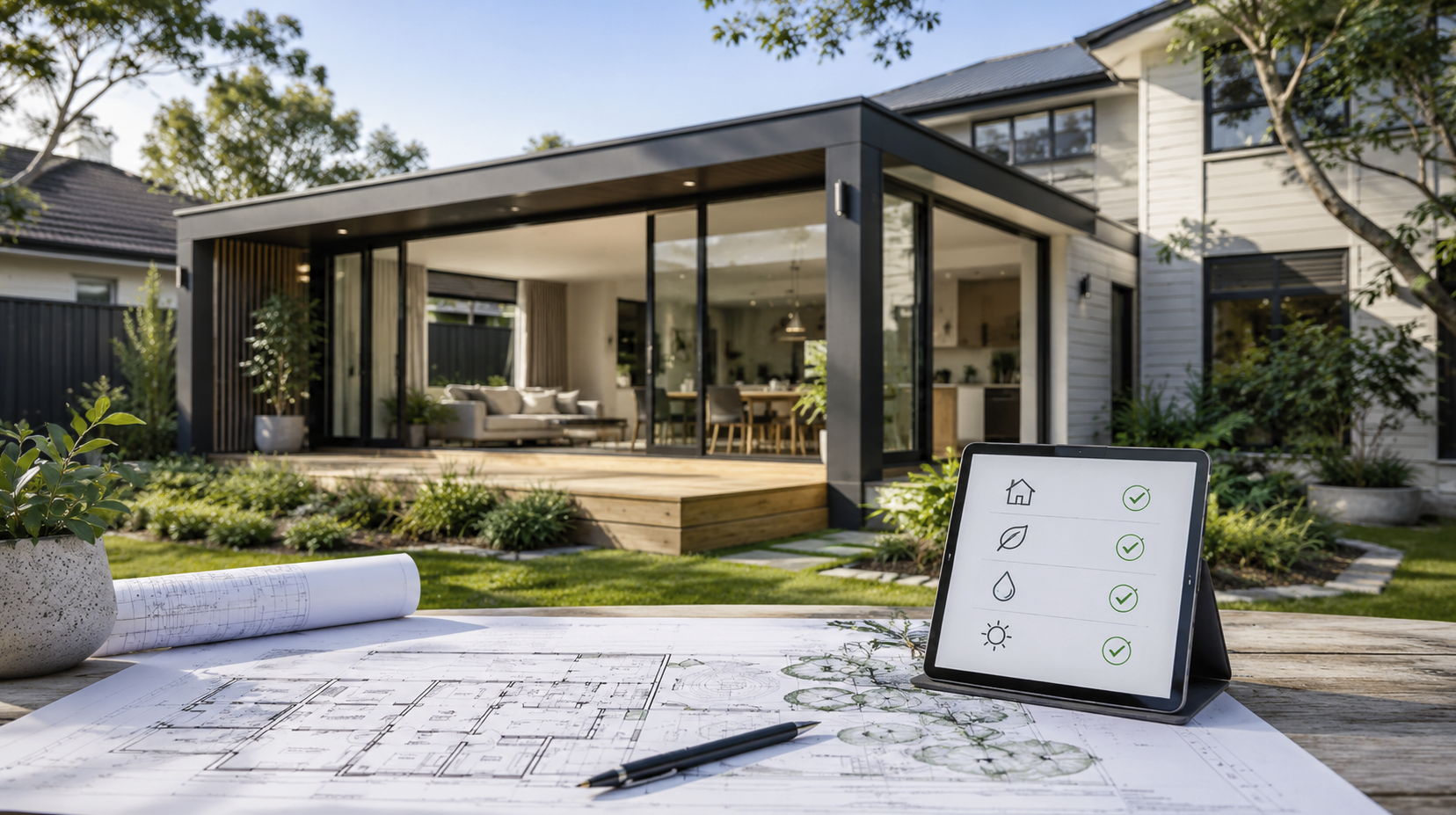
If you are planning a home extension in NSW, one of the first things to check is whether the project will need a BASIX Certificate. Many homeowners assume BASIX only applies to brand new homes, but that is not the case. In NSW, BASIX can also apply to extensions, renovations, and other alterations and additions when certain triggers are met.
For most extension projects, the key trigger is project value. If the alterations and additions are valued at $50,000 or more, BASIX generally becomes part of the approval process. BASIX can also apply where the project involves a pool or spa with a total volume greater than 40,000 litres. That means an extension project does not need to be a full house rebuild to fall within the BASIX framework.
For homeowners, the practical takeaway is simple. BASIX should be checked early, before lodging a DA or CDC and before assuming the extension is too small or too straightforward to be affected. When the BASIX position is clear from the start, the design and approval process is usually much smoother.
Key Takeaways
- BASIX can apply to home extensions in NSW, not just new houses.
- The main trigger for extensions is alterations and additions valued at $50,000 or more.
- BASIX can also apply if the extension project includes a pool or spa over 40,000 litres.
- Extension projects usually follow the alterations and additions BASIX pathway.
- Choosing the correct BASIX pathway early helps avoid delays and rework.
- Checking BASIX before DA or CDC lodgement is the safest way to keep the project moving smoothly.
Summary Table
| Home Extension Scenario | BASIX Position |
|---|---|
| Extension under $50,000 | BASIX usually not triggered on cost alone |
| Extension $50,000 or more | BASIX usually required |
| Extension plus pool or spa over 40,000 litres | BASIX usually required |
| New room, sunroom, attic, or basement addition | Can fall under alterations and additions |
| Incorrect BASIX pathway selection | Can create delays and rework |
| Best time to check | Before lodging a DA or CDC |
What BASIX Means for Home Extension Projects
BASIX is the NSW residential sustainability framework used to assess water, energy, and thermal performance in certain residential development projects. While many people associate BASIX with new houses, it also applies to alterations and additions to existing homes when the relevant trigger is met. That makes it directly relevant to many home extension projects.
For homeowners, this matters because an extension is not treated simply as extra floor area with no sustainability implications. Once BASIX applies, the project needs to be assessed through the proper pathway and the resulting BASIX Certificate becomes part of the approval documentation. In other words, BASIX is not an optional extra once the extension falls within the trigger.
This is why it helps to think about BASIX early in the planning process. The extension may seem straightforward from a building point of view, but if it crosses the BASIX threshold it becomes part of the broader compliance pathway and should be addressed accordingly.
The Main Cost Trigger for BASIX on Extensions
The main trigger for BASIX on home extensions in NSW is project value. NSW Planning states that BASIX applies to all alterations and additions in NSW that are valued at $50,000 and over. For homeowners, this is the clearest threshold to understand because it captures a large number of extension projects that are more substantial than minor cosmetic work.
This means BASIX can apply whether the extension is a new bedroom wing, an extended living area, a second-storey addition, a sunroom, or another significant residential addition, as long as the value threshold is met. The key point is that BASIX is triggered by the scope and value of the work, not simply by whether the project is called an “extension”.
For practical purposes, this is why it is worth confirming the likely value of the project early. Once the extension reaches the BASIX threshold, the certificate needs to be factored into the design and approval process rather than treated as something that can be dealt with later.
Pools, Spas, and Other Additions Can Also Trigger BASIX
A home extension project may also trigger BASIX because of additions beyond the extension itself. NSW Planning says BASIX applies to alterations and additions that involve the installation of a pool and or spa with a total volume greater than 40,000 litres. This means a project can enter BASIX territory even where the extension works alone may not be the only relevant factor.
This is particularly important for homeowners planning broader upgrade projects. An extension, outdoor entertaining area, and new pool may all be seen as part of one overall proposal. In that situation, BASIX should be checked across the full project rather than only focusing on the house extension in isolation.
The practical lesson is that BASIX triggers are not limited to enclosed building works alone. If the broader scope includes a qualifying pool or spa, the BASIX pathway may still be required and should be considered early.
Which BASIX Pathway Home Extensions Usually Follow
Most extension projects that trigger BASIX are assessed through the alterations and additions pathway. NSW Planning says the BASIX tool has a section specifically designed for alterations and additions to existing homes. This is the pathway generally used where homeowners are extending, modifying, or adding to an existing dwelling rather than creating a completely new standalone home.
This matters because BASIX uses different pathways for single dwellings, multi-dwellings, and alterations and additions. If the wrong pathway is selected at the start, the assessment may not reflect the project properly and this can lead to avoidable delays later in the approval process.
For homeowners, the takeaway is that a home extension is usually not entered into BASIX the same way as a new house. It needs to be approached as an alteration and addition to an existing home, with the project details and documentation matching that pathway from the start.
What Types of Extensions Commonly Fall Within BASIX
Many different kinds of extension work can fall within BASIX once the trigger is met. NSW BASIX guidance and datasets make it clear that alterations and additions can include additions such as a basement, attic, sunroom, and even certain secondary dwelling conversions created from existing habitable space. That means BASIX is not limited to only large rear extensions or second-storey additions.
For homeowners, this is useful because it shows BASIX is tied more to the nature and scale of the residential addition than to one specific style of extension. A sunroom addition, attic extension, major rear addition, or basement conversion can all become BASIX projects if the overall work falls into the triggering category.
This is why project labels can be misleading. An “extension” might sound simple, but from a BASIX perspective the key question is whether the work is a qualifying alteration or addition to an existing home and whether it crosses the relevant threshold.
Why It Is Best to Check BASIX Before Lodgement
The best time to check BASIX is before the DA or CDC is lodged. Once plans are already being prepared for submission, discovering that the extension triggers BASIX can create unnecessary delays. BASIX becomes part of the approval documentation when it applies, so it is much easier to handle as an early compliance item than as a late-stage problem.
For homeowners, this is especially important where the project scope is close to the threshold or includes multiple parts such as an extension, pool, or significant internal alterations. Even when the extension seems relatively straightforward, the BASIX requirement can still apply and needs to be reflected in the documentation from the start.
The earlier BASIX is confirmed, the easier it is to align the plans, specifications, and approval pathway properly. That usually means fewer surprises, fewer revisions, and a smoother project overall.
Final Thoughts
Home extensions in NSW can trigger BASIX more often than many homeowners expect. In general, BASIX applies when alterations and additions are valued at $50,000 or more, or when the project includes a pool or spa over 40,000 litres. For most extension projects, that means the BASIX position should be checked early rather than assumed away.
The simplest way to avoid delays is to confirm the trigger before lodging a DA or CDC and make sure the project is entered through the correct alterations and additions BASIX pathway. When that is done early, the extension project is much easier to document and much easier to move through approval.
FAQs
1. Do home extensions need a BASIX Certificate in NSW?
Yes, home extensions can need a BASIX Certificate in NSW if the project triggers BASIX, most commonly when the alterations and additions are valued at $50,000 or more.
2. What is the BASIX cost trigger for an extension?
The main BASIX trigger for extensions is alterations and additions valued at $50,000 and over.
3. Does BASIX apply to small extensions?
Not always. If the extension is below the BASIX trigger threshold and does not include a qualifying pool or spa, BASIX may not apply, but it is still worth checking early.
4. What BASIX pathway does an extension use?
Most home extensions that trigger BASIX use the alterations and additions pathway rather than the single dwelling pathway.
5. Can a pool included with an extension trigger BASIX?
Yes. A pool or spa with a total volume greater than 40,000 litres can trigger BASIX, even when it is part of a broader extension project.
6. When should I organise BASIX for a home extension?
It is best to organise BASIX before lodging the DA or CDC, once the extension scope and project details are clear.