
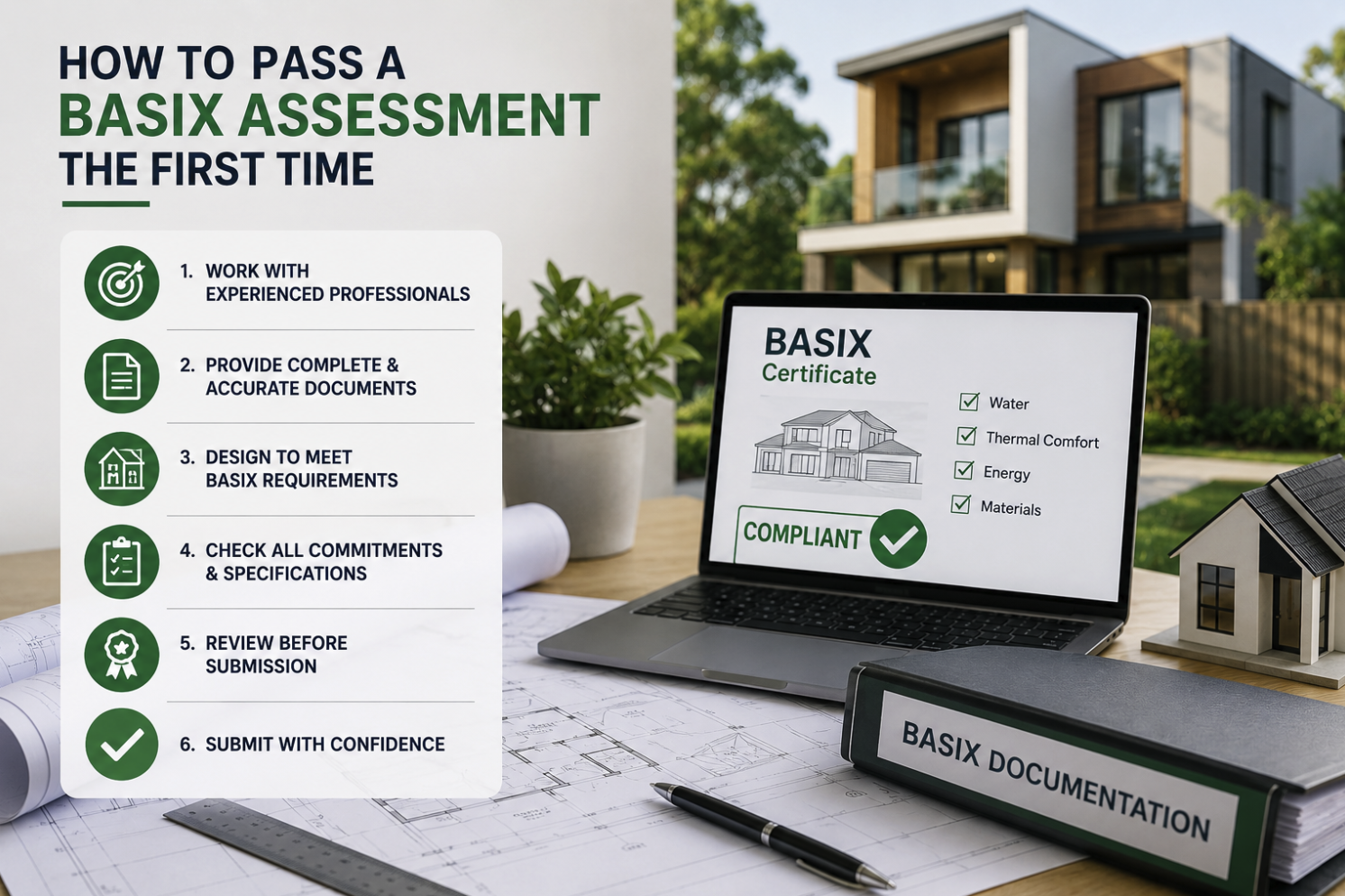
One of the most common BASIX questions in NSW is also one of the most important to answer early: when do you actually need a BASIX Certificate? For homeowners and developers, getting this wrong can cause unnecessary delays during the approval process, especially if plans are already being prepared for lodgement. The good news is that the main BASIX triggers are fairly clear once you know what to look for.
In general, BASIX applies to certain residential projects in NSW where sustainability commitments must be assessed before approval. This usually includes new homes, larger alterations and additions, and some pool or spa projects. The key is understanding whether your project falls within one of those trigger categories before you move too far into design or lodgement.
For practical purposes, this means BASIX should be checked early, not at the last minute. If the project requires a BASIX Certificate, it will need to be prepared as part of the broader planning pathway. When identified early, that process is usually much smoother and easier to manage.
Key Takeaways
- A BASIX Certificate is generally required for new residential dwellings in NSW.
- BASIX also applies to alterations and additions that cost $50,000 or more.
- A swimming pool or spa of 40,000 litres or more can also trigger BASIX.
- BASIX should be checked before lodging a DA or CDC, not after.
- Different residential project types follow different BASIX assessment pathways.
- Early BASIX advice can help homeowners and developers avoid approval delays.
Summary Table
| Project Type | Is BASIX Usually Required? |
|---|---|
| New home | Yes |
| Multi-dwelling residential project | Yes |
| Alterations and additions under $50,000 | Usually no |
| Alterations and additions $50,000 or more | Yes |
| Pool or spa under 40,000 litres | Usually no |
| Pool or spa 40,000 litres or more | Yes |
What BASIX Is and Why It Matters in NSW
BASIX is the NSW residential sustainability framework used to assess water use, energy use, and thermal performance before certain types of residential development are approved. In practice, it forms part of the planning and approval process and helps show that the proposed development meets the required sustainability standards.
For homeowners, BASIX often becomes relevant at the same time as plans are being prepared for a development application or complying development certificate. For developers, it is part of the broader approval pathway that needs to be factored into project timing and documentation. It is not something that should be treated as an afterthought.
This matters because if a BASIX Certificate is required, it needs to align with the project being lodged. That means the design, documentation, and BASIX commitments should all be working together from the start. When BASIX is identified early, the process is usually far easier than trying to deal with it late.
New Homes Usually Require a BASIX Certificate
If you are building a new home in NSW, a BASIX Certificate will usually be required. This is one of the clearest and most consistent BASIX triggers. The BASIX framework applies to new residential dwellings, which is why it is so commonly discussed in the early design and approval stages of a new build.
This applies not only to standard detached homes, but also to a broader range of residential dwelling types depending on the project pathway. In practical terms, if the project involves a new residential dwelling, BASIX should be expected as part of the approval process unless there is a very specific reason it would not apply.
For homeowners, this means BASIX should be considered as soon as the new home plans are becoming settled. For developers, it means BASIX should be built into the planning process from the beginning, especially where timing, consultants, and documentation need to line up for lodgement.
Renovations and Additions Trigger BASIX at $50,000 or More
A BASIX Certificate is also generally required for alterations and additions to an existing dwelling when the project cost reaches $50,000 or more. This is one of the most important triggers for homeowners, because many people assume BASIX only applies to brand new homes. In NSW, that is not the case.
If the renovation or addition meets the threshold, BASIX becomes part of the approval process. This can apply regardless of whether the work is an extension, major internal reconfiguration, attic or basement addition, or another qualifying residential upgrade. The important point is not just the type of work, but whether the project falls within the BASIX trigger threshold.
For homeowners planning larger renovation work, this is why it is worth checking BASIX early. Once the project is above the threshold, the BASIX Certificate needs to be factored into the design and approval pathway rather than treated as something optional.
Pools and Spas Can Also Require BASIX
Another common trigger that catches people by surprise is pools and spas. In NSW, BASIX can apply where a swimming pool or spa has a capacity of 40,000 litres or more. This means BASIX is not limited to whole-house building projects. It can also apply to certain outdoor additions where water use becomes part of the assessment.
This is especially relevant for homeowners who are planning landscaping or external works as part of a broader project. Even if the house itself is not being rebuilt, a qualifying pool or spa can still trigger the need for BASIX. That is why it is important to consider the total project scope rather than focusing only on the main building works.
For developers and homeowners alike, the practical takeaway is simple: if a large pool or spa is part of the proposal, BASIX should be checked before lodgement to avoid unnecessary surprises.
Different Project Types Use Different BASIX Pathways
Not every BASIX project is assessed in exactly the same way. The BASIX system uses different assessment pathways depending on whether the development is a single dwelling, a multi-dwelling project, or alterations and additions to an existing home. This matters because selecting the correct pathway affects how the project is set up in the BASIX tool.
For developers, this is especially important on more complex residential projects. A multi-dwelling project may follow a different process from a standard single-house application, and that can affect both setup and documentation. For homeowners, the main issue is usually making sure the project type is identified correctly from the beginning.
This is one of the reasons early BASIX advice can be so useful. When the project is placed in the right pathway from the start, the assessment is generally much smoother and the risk of unnecessary rework is reduced.
Why You Should Check BASIX Before Lodging a DA or CDC
The best time to check whether BASIX is required is before lodging a development application or complying development certificate. Once plans are already being prepared for submission, it is much harder to make changes without disrupting the timing of the project.
If BASIX applies, the certificate needs to be prepared and attached as part of the approval documentation. That means it should be treated as one of the early compliance items, not something left until the end. Delays often happen when BASIX is only considered after the plans are already close to lodgement.
For homeowners and developers, the most practical approach is to confirm the BASIX position as soon as the project scope is clear. That gives the design team time to prepare the right documentation and reduces the chance of running into preventable approval issues later.
Final Thoughts
A BASIX Certificate is generally required in NSW when you are building a new home, carrying out alterations and additions worth $50,000 or more, or installing a pool or spa of 40,000 litres or more. Those are the main triggers, but the exact pathway still depends on the type of residential project involved.
For homeowners and developers, the most important step is to check BASIX early. When the requirement is identified at the start, it is much easier to align the plans, documentation, and approval pathway properly. That usually means fewer delays, fewer surprises, and a smoother project overall.
FAQs
1. Do all new homes need a BASIX Certificate in NSW?
Yes, new residential dwellings in NSW generally require a BASIX Certificate as part of the approval process.
2. Do renovations always need BASIX?
No. Renovations and additions usually trigger BASIX when the project cost is $50,000 or more.
3. Does a pool need a BASIX Certificate?
A pool or spa can require BASIX if it is 40,000 litres or more.
4. Do I need BASIX before lodging a DA?
Yes, if your project triggers BASIX, the certificate should be prepared before lodging the DA or CDC.
5. Does BASIX apply to multi-dwelling projects?
Yes, BASIX applies to multi-dwelling residential projects, but the project follows a different assessment pathway from a standard single dwelling.
6. What happens if I do not realise BASIX is required until later?
It can delay the approval process because the BASIX Certificate may need to be prepared or revised before the application can move forward properly.